What Is a 360-Degree SEO Plan? A Complete Guide for Businesses in 2026
In today’s competitive digital landscape, SEO is no longer just about keywords and backlinks. Businesses need a comprehensive, all-encompassing approach to stay visible and relevant. That’s where a 360-degree SEO plan comes in. Whether you’re a startup, eCommerce brand, or a service-based company, understanding and implementing a 360° SEO strategy can significantly boost your online visibility, traffic, and conversions. Let’s break down what a 360-degree SEO plan really means, why it matters, and how to build one that works.

What Is a 360-Degree SEO Plan?
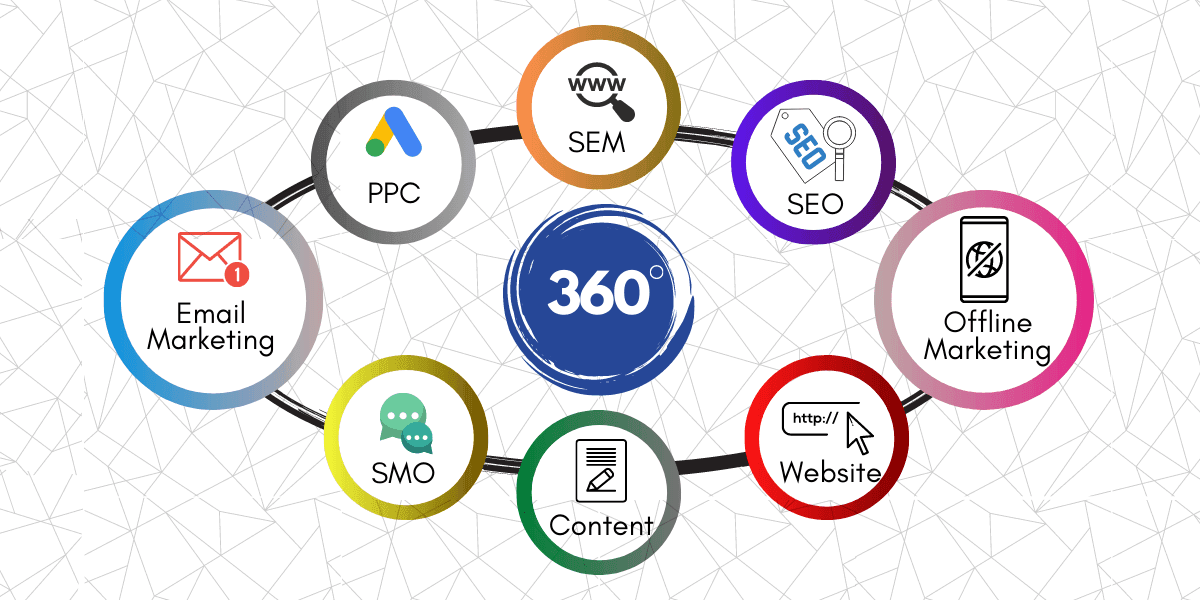
A 360-degree SEO plan is a holistic, integrated SEO strategy that covers every aspect of your digital presence—from technical optimization and content creation to user experience and off-page efforts like link building and digital PR.
Rather than focusing on just one or two tactics, this approach considers how all SEO components work together to drive sustainable, long-term growth.
A 360° SEO Strategy Includes:
-
Technical SEO (site structure, speed, mobile optimization)
-
On-Page SEO (content, keywords, internal linking)
-
Off-Page SEO (backlinks, digital PR, brand mentions)
-
Local SEO (Google Business Profile, local citations)
-
Content Strategy (blogs, landing pages, visual content)
-
User Experience (UX) and Core Web Vitals
-
Analytics & Performance Tracking
-
Voice Search & AI Optimization
Why Do You Need a 360° SEO Strategy in 2026?
With search algorithms becoming smarter and user behavior more complex, partial or isolated SEO efforts no longer cut it. A 360-degree plan ensures your brand is visible across all search touchpoints—Google Search, AI-powered responses, featured snippets, voice assistants, maps, and more.
Key Benefits:
-
Higher rankings and organic traffic
-
Improved website usability and experience
-
Better conversion rates
-
Resilience against algorithm updates
-
Broader brand visibility (search, social, local, mobile)
Components of a 360-Degree SEO Plan
1. Technical SEO: Laying the Foundation
Make sure your website is crawlable, fast, and error-free.
-
Mobile-first design
-
Fast page load speed
-
Secure HTTPS protocol
-
Clean URL structures
-
Fix broken links and duplicate content
-
Submit XML sitemaps and robots.txt
2. On-Page SEO: Content + Optimization
Ensure every page is optimized for both users and search engines.
-
Strategic keyword usage (primary + semantic)
-
Optimized meta tags (titles, descriptions, H1-H6)
-
Image optimization (alt text, file size)
-
Clear internal linking
-
High-quality, original content
3. Off-Page SEO: Building Authority
Strengthen your online reputation through credible, external signals.
-
Quality backlink building
-
Digital PR and influencer outreach
-
Forum participation (e.g., Quora, Reddit)
-
Online reviews and testimonials
-
Social media signals
4. Local SEO: Dominating Local Search
Perfect for businesses with physical locations or local services.
-
Claim and optimize your Google Business Profile
-
Add location-based keywords
-
Get listed in local directories (NAP consistency)
-
Collect and respond to local reviews
-
Use location schema markup
5. Content Marketing: The Engine of SEO
Drive traffic, engagement, and leads through content.
-
Blog posts optimized for SEO
-
Visual content (infographics, videos)
-
Long-form guides and pillar pages
-
Topic clusters and content hubs
-
FAQs and schema-enhanced content
6. UX & Core Web Vitals
User experience is now a ranking factor.
-
Optimize for Core Web Vitals (LCP, FID, CLS)
-
Simplify navigation
-
Use responsive design
-
Improve accessibility (ADA compliance)
-
Reduce pop-ups and intrusive elements
7. Voice Search & AI Optimization
Adapt to how people search with devices and AI tools.
-
Use natural language and question-based content
-
Target featured snippets
-
Optimize for AI Overviews and Google’s AI Mode
-
Include concise, conversational answers
-
Focus on E-E-A-T (Experience, Expertise, Authoritativeness, Trust)
8. Analytics & Tracking
Measure everything to improve continuously.
-
Google Analytics 4 (GA4)
-
Google Search Console
-
Conversion tracking (goals, events)
-
Heatmaps and behavior analysis tools
-
A/B testing for landing pages
How to Build a 360-Degree SEO Plan: Step-by-Step
Step 1: Audit Your Current SEO Status
Start with a full SEO audit covering technical health, keyword rankings, backlink profile, and content quality.
Step 2: Set SMART SEO Goals
Define Specific, Measurable, Achievable, Relevant, and Time-bound objectives (e.g., “Increase organic traffic by 30% in 6 months”).
Step 3: Create a Strategy Document
Include keyword targeting, content themes, technical fixes, outreach plans, and performance KPIs.
Step 4: Execute Across All Pillars
Ensure your strategy includes every aspect mentioned above—on-site, off-site, technical, local, and content.
Step 5: Monitor, Analyze & Improve
SEO is never "done." Regularly assess your performance and iterate based on data and trends.
Is a 360-Degree SEO Plan Worth It?
Absolutely. A fragmented SEO approach might get short-term results, but only a complete, 360-degree plan can deliver sustainable growth in a world where search engines, user behavior, and AI are constantly evolving.
Final Thoughts
A 360-degree SEO plan is no longer optional—it’s essential. It enables your brand to thrive in organic search, meet user expectations, and adapt to future technologies like voice search and AI-driven interfaces.
Whether you're a business owner, marketer, or SEO consultant, now is the time to invest in a strategy that leaves no gaps, no guesswork, and no missed opportunities.
Our Clients
Trusted by 2500+ businesses for innovative website design & development solutions.







Our Services
Latest Posts
Custom CRM vs. Off-The-Shelf Software: Why Growing Indian Businesses Need Tailored Systems
Mastering custom crm software development mumbai requires adopting structured, evidence-based practices that prioritize quality, cost transparency, and procedural safety. By aligning with verified industry benchmarks, users and businesses can overcome seasonal challenges, streamline decision-making, and achieve long-term reliability without unexpected expenses. Navigating modern requirements for custom crm software development mumbai has become increasingly critical as market conditions and seasonal priorities evolve in Q4. Whether addressing personal needs, travel logistics, or business transformations, having clear technical guidance eliminates costly missteps. At Nexgeno Technology, our team of dedicated domain specialists provides high-impact solutions designed for reliability and measurable success. In this comprehensive guide for October Week 4, we analyze key industry considerations, evaluate practical alternatives, and provide an actionable roadmap for optimal results.
GEO by Engine: How ChatGPT, Claude, Gemini, and Perplexity Choose What to Show
Generative AI has changed how people search for information. Instead of typing a short keyword into Google and opening several websites, users can now ask complete questions to platforms such as ChatGPT, Claude, Gemini, and Perplexity and receive a conversational answer within seconds. That creates a new challenge for businesses. Ranking on Google is still important, but brands also need to understand how their content can become visible, referenced, mentioned, and cited inside AI-generated answers. This is where Generative Engine Optimization (GEO) becomes important. However, there is one major misconception: there is no universal GEO formula that works identically across every AI platform. ChatGPT, Claude, Gemini, and Perplexity have different products, retrieval systems, data sources, and ways of presenting information. Their exact ranking and selection mechanisms are proprietary, so nobody outside the companies operating these systems can provide a complete formula. What marketers can do is study their publicly documented capabilities, observable behaviour, search experiences, and content requirements — then build content that is useful across these different environments. In this guide, we will break down how GEO differs across ChatGPT, Claude, Gemini, and Perplexity, what businesses should focus on, and how traditional SEO fits into the AI-search era.
Meta Tags for SEO: What They Are, Why They Matter, and How to Use Them Right
Meta tags are small pieces of information added to a webpage's HTML that help search engines, browsers and other platforms understand or process the page. Some metadata can influence how a page is indexed or represented in Google Search, while other elements mainly affect how the page appears when shared on social platforms. For modern SEO, meta tags should not be treated as a ranking shortcut. A strong SEO strategy combines metadata with useful content, technical accessibility, internal linking, site structure, page experience and search intent. In this guide, we will explain the most important meta tags and related HTML elements, what each one does, how to optimise them, common mistakes to avoid, and how metadata fits into modern SEO and AI-powered search.
Get In Touch










- Website Maintenance
- SSL Certificates
- Top SEO Company in Mumbai
- Social Networking
- AI/ML Development
- Mobile App Development
- Cloud Solutions Services
- E-Commerce Website
- Product Prototyping
- Front-end Development
- Digital Transformation
- Custom Website Designing
- Search Engine Optimization
- Application Development
- Website Development
- Website Designing
- Hire Vue Js Developer
- Hire Next Js Developer
- Hire WordPress Developer
- Hire OpenCart Developer
- Hire Magento Developer
- Hire Shopify Developer
- Hire React JS Developers
- Hire Angular Developers
- Hire PWA Developers
- Hire React Native Developers
- Hire Lonic Developers
- Hire Flutter Developers
- Hire Android App Developers
- Hire iOS App Developers
- Hire Express JS Developers
- Hire CodeIgniter Developers
- Hire Laravel Developers
- Hire PHP Developers